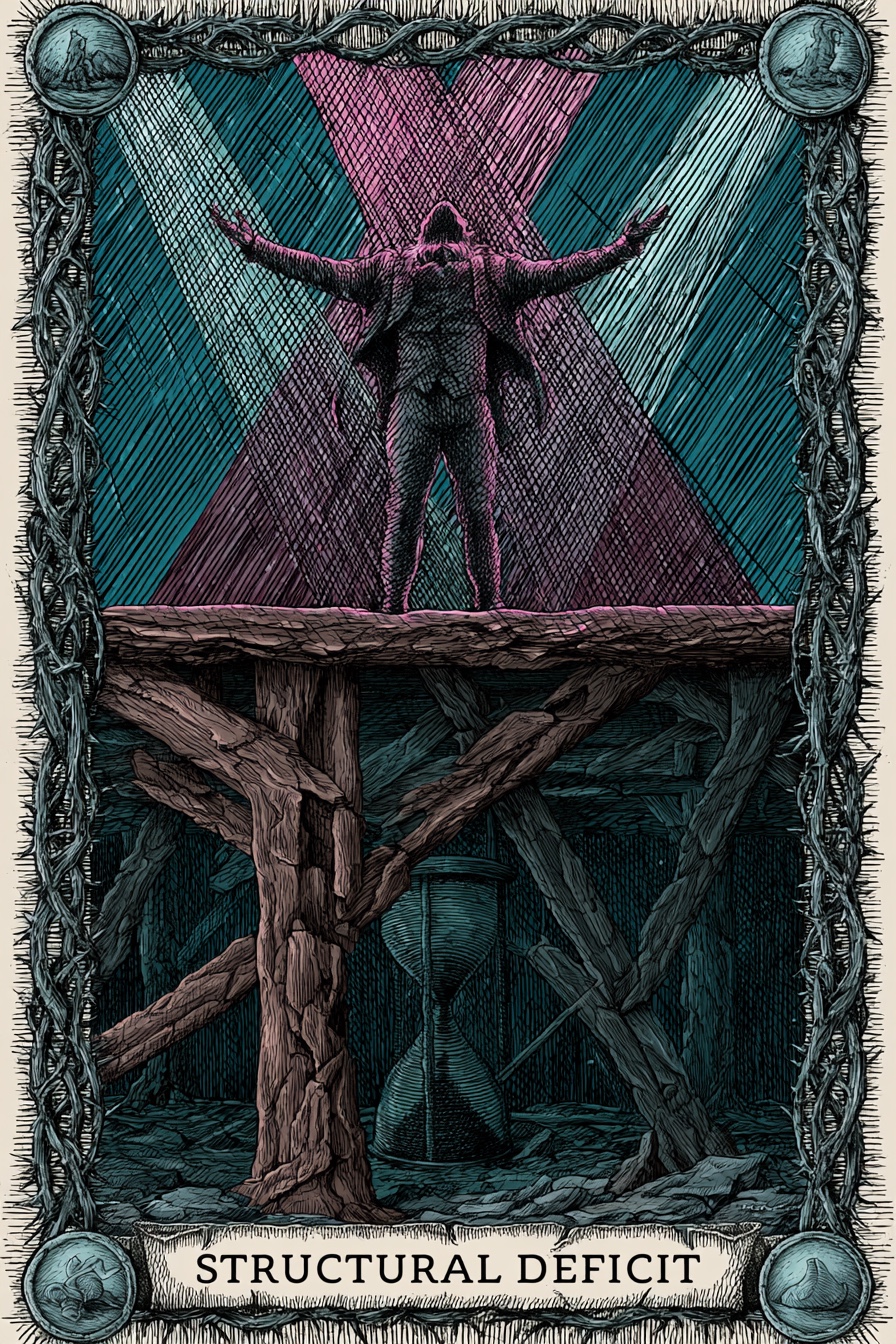
Structural Deficit
"Honors and celebrates theatrical heritage while building a sustainable foundation for future years."
— Statement of Program Service Accomplishments
What does this mean?
Persistently low financial health over 5 years despite strong programmatic output. They are borrowing from their future (or bleeding an endowment) to pay for today's programs.
The Path Forward
The Truth-Teller
Forces necessary, painful cuts to preserve the core. It demands that the organization stop borrowing from its future and align its current programmatic output with actual sustainable revenue.
Title
Representative Institutions
Institutional Epochs
Historical Performance
| Year | Revenue | Top Comp | Comp % Rev | Score | Phase Label | Outlook | Details |
|---|---|---|---|---|---|---|---|
| 2025 | Hidden | Hidden | — | — | Unknown | — | |
| 2024 | Hidden | Hidden | 5.3% | 32 | Critical Intervention Needed | Decline Risk | |
| 2023 | Hidden | Hidden | 5.7% | 29 | Critical Intervention Needed | Decline Risk | |
| 2022 | — | — | 10.2% | 27 | Critical Intervention Needed | Decline Risk | |
| 2021 | — | — | 59.6% | 33 | Critical Intervention Needed | Gov Risk | |
| 2020 | — | — | 9.4% | 32 | Critical Intervention Needed | Decline Risk | |
| 2019 | — | — | 6.9% | 32 | Critical Intervention Needed | Decline Risk | |
| 2018 | — | — | 5.0% | 35 | Financially Distressed | Decline Risk | |
| 2017 | — | — | 4.5% | 35 | Financially Distressed | Decline Risk | |
| 2016 | — | — | 3.3% | 35 | Financially Distressed | Decline Risk | |
| 2015 | — | — | 2.2% | 35 | Financially Distressed | Decline Risk | |
| 2014 | — | — | 2.1% | 32 | Critical Intervention Needed | Decline Risk | |
| 2013 | — | — | 2.1% | 35 | Financially Distressed | Decline Risk | |
| 2012 | — | — | 2.1% | 35 | Financially Distressed | Decline Risk | |
| 2011 | — | — | 1.8% | 55 | Fragile | Stable Watch |
Officer compensation history
Tax year 2026
| Name | Title | Phone | Compensation | |
|---|---|---|---|---|
| Erik Vose | Executive Director | 5.4% of Rev | ||
| Jay Lokken | Board President | — | ||
| Mary Isaacs | Treasurer | — | ||
| Mary Rathgaber | Secretary | — | ||
| Joe Hammes | Board President | — | ||
| Neal Meier | Board President | — | ||
| Bradley Weber | Board Member | — | ||
| Stephen Conrad | Board Member | — | ||
| Monica Organ | Board Member | — | ||
| Carolyn Colleen | Board Member | — | ||
| Richard Reynertson | Board Member | — | ||
| Dick Record | Board Member | — | ||
| Marlene De La Cruz-Guzman | Board Member | — | ||
| Kelly Galvan | Board Member | — | ||
| Randy Nelson | Board Member | — | ||
| Mark Solyst | Board Member | — | ||
| Pat Heim | Board President | — |
Tax year 2023
| Name | Title | Phone | Compensation | |
|---|---|---|---|---|
| Jason Sullivan | Executive Director | 7.7% of Rev | ||
| Erik Vose | Board Member | 3.4% of Rev | ||
| Brady Lowe | Board Member | — | ||
| Lynnetta Kopp | Board Member | — | ||
| Richard Reynertson | Board Member | — | ||
| Rob Reider | Board Member | — | ||
| Dick Record | Board Member | — | ||
| Mary Ann Gschwind | Board Member | — | ||
| Stephen Conrad | Board Member | — | ||
| Clara Gelatt | Board Member | — | ||
| Jay Lokken | Board President | — | ||
| Pat Heim | Board President | — | ||
| Mary Isaacs | Treasurer | — | ||
| Bradley Weber | Board President | — | ||
| Mary Rathgaber | Secretary | — |
Tax year 2021
| Name | Title | Phone | Compensation | |
|---|---|---|---|---|
| GRANT GOLSON | Executive Director | 4.6% of Rev | ||
| DOMINIQUE LUECKE | Board Member | 0.0% of Rev | ||
| PATRICIA SPRANG | Treasurer | — | ||
| SUSAN MCDONALD-CONROY | Board President | — | ||
| STACEY EVERSON | Board Member | — | ||
| PAT HEIM | Board Member | — | ||
| TAMERA HILL | Board Member | — | ||
| BRADLEY WEBER | Board President | — | ||
| MARY ANN GSCHWIND - TERM ENDS 2020 | Secretary | — | ||
| TIM KOLEK | Board Member | — | ||
| MARY ISAACS - TERM ENDS 2020 | Board President | — | ||
| BILL KOUTSKY - TERM 2023 | Board Member | — | ||
| BRADY LOWE - TERM ENDS 2021 | Board Member | — | ||
| MARY RATHGABER | Board Member | — | ||
| MIKE HERRO | Board President | — | ||
| JOAN TEMPLE | Board Member | — | ||
| KATHY VAN KIRK-PRZYWOJSKI | Board Member | — |
Score breakdown
The three components combine into a single 0–100 score weighted as shown. Full methodology →
Peer comparison
Compared to 182 other orgs in WI with NTEE prefix A6.
Most-divergent component: financial score sits 56 points below the peer median (0 vs. 56).
5-year trend: Structural Deficit
Persistently low financial health over 5 years despite strong programmatic output. They are borrowing from their future (or bleeding an endowment) to pay for today's programs.
What's driving this score
- Comp-to-revenue ratio of 5.3% sits within the sector's healthy band (18–22%).
- Two consecutive years of deficit spending.
- Financial resilience score in the bottom quartile — reserves and liabilities ratios warrant review.
What would change this score
The two changes that would most improve this score:
- Build cash reserves to at least 3 months of operating expenses — moves financial resilience score meaningfully (~10 points).
- Stabilize program expenses or grow earned-income revenue to break the consecutive-deficit pattern (~8 points to financial score).
Improving governance is a board decision. These are the levers.